.png)
Utilization Management (UM) is where insurance decides what care patients get — and how fast. Every authorization the system slows down is a clinical decision delayed.
The platform had been in market for fifteen years. Its sibling product — a Care Management platform from the same company — had recently been modernized. UM had not. The result was a widening gap: a dated interface in front of enterprise buyers, a cluttered workflow in front of the nurses, coordinators, and physicians making the actual decisions, and an NCQA compliance posture that increasingly depended on people working around the software rather than with it.
I was brought in as Lead Product Designer to close that gap.
In healthcare SaaS, where every platform ships the same regulatory feature set, the durable differentiator is the speed and accuracy of the clinical work the platform enables. A faster, clearer UM platform isn't a nicer product — it's a better clinical outcome and a more defensible commercial position. The redesign needed to deliver both.
User interviews with Coordinators, Nurse Reviewers and Physicians surfaced what documentation could not: the toggling, the workarounds, the screens people had given up on.
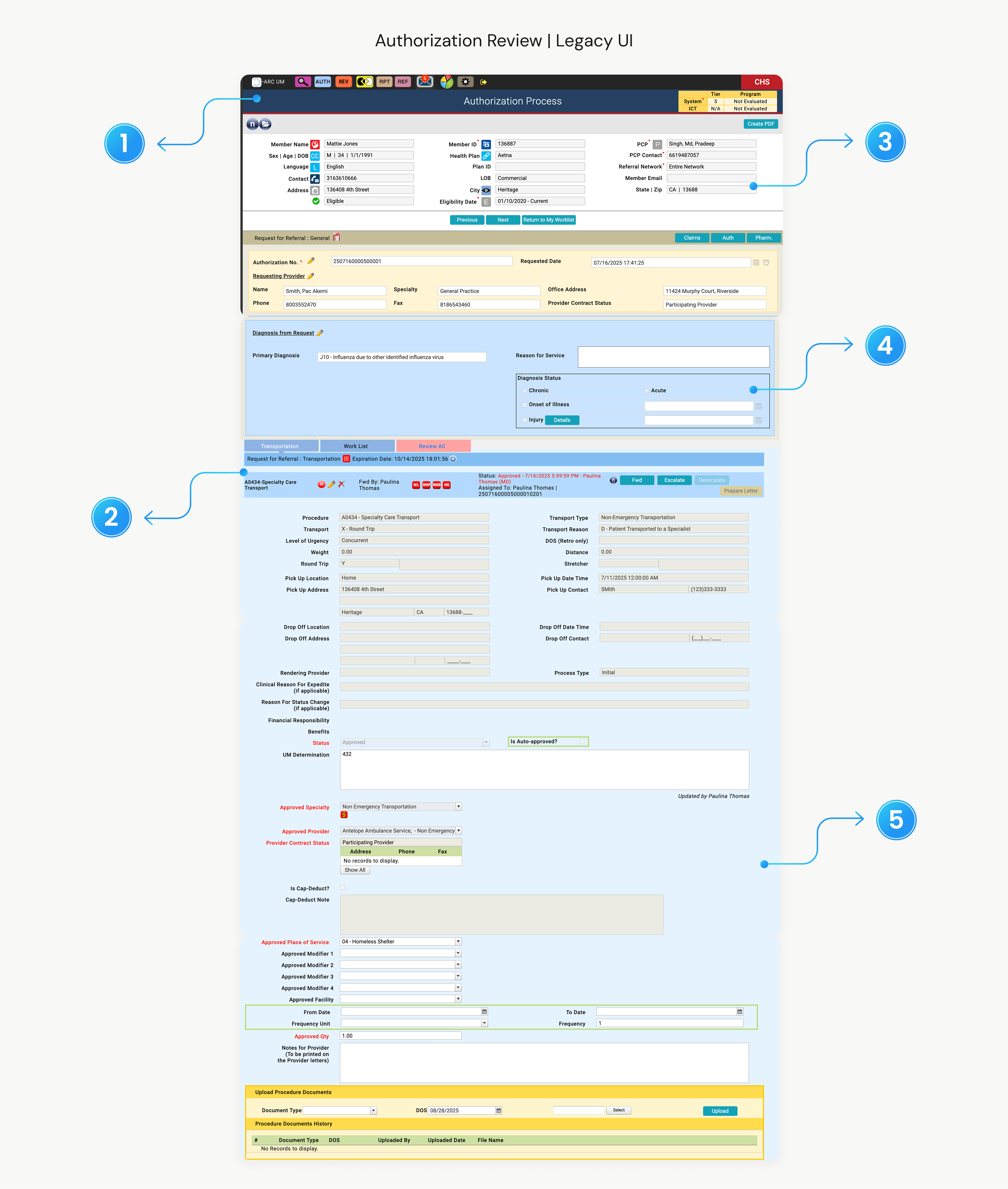
A legacy platform audit mapped the existing sitemap, cataloged every component behavior, and traced end-to-end flows. This produced a baseline that grounded every later argument in something more rigorous than opinion.
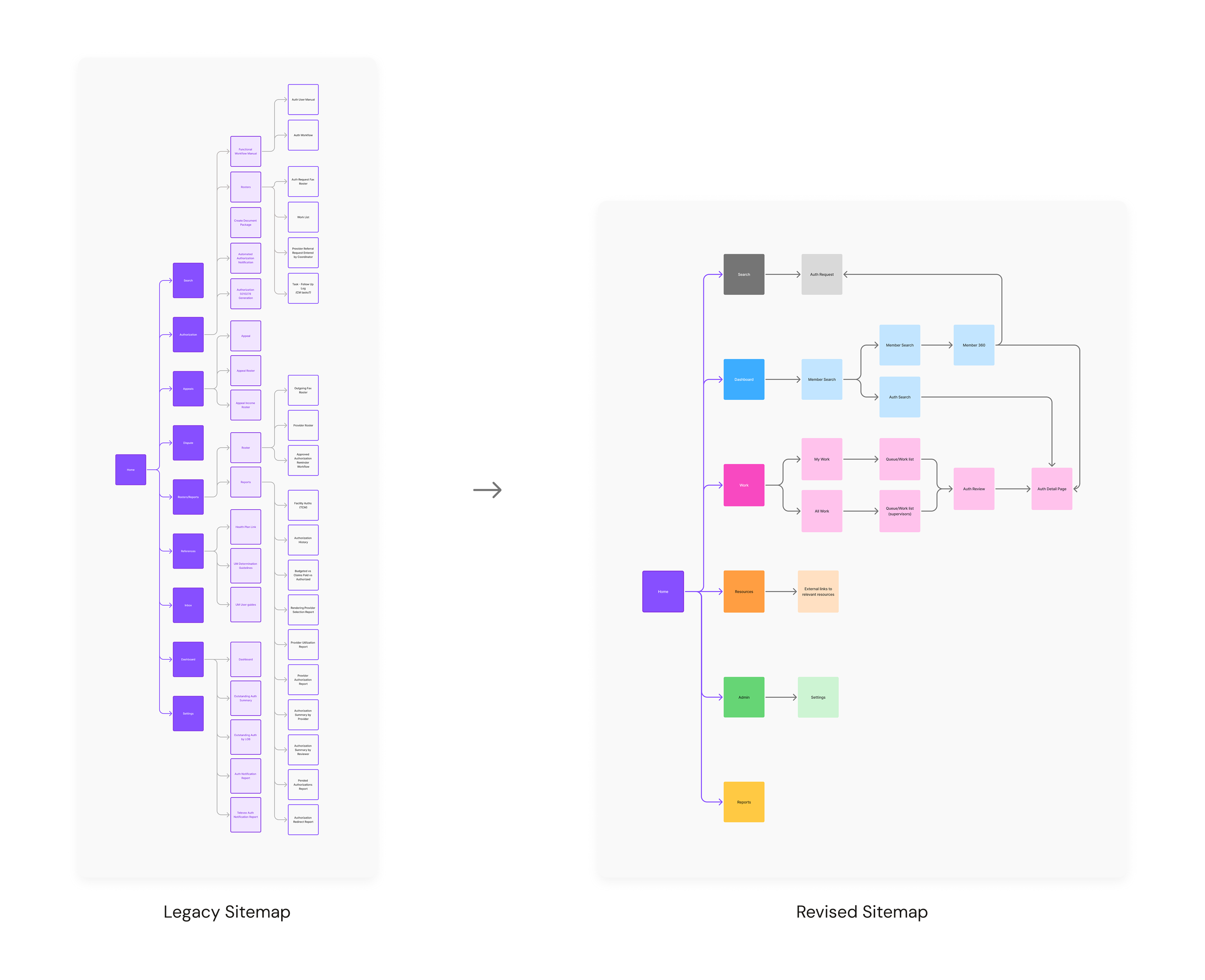
A new information architecture collapsed the bloated sitemap into a model organized around the clinical workflows that mattered most to each role — not around the database tables the legacy system reflected.
Wireframes tested the new IA at low fidelity, surfacing permission-state variants and layout logic before any high-fidelity investment.
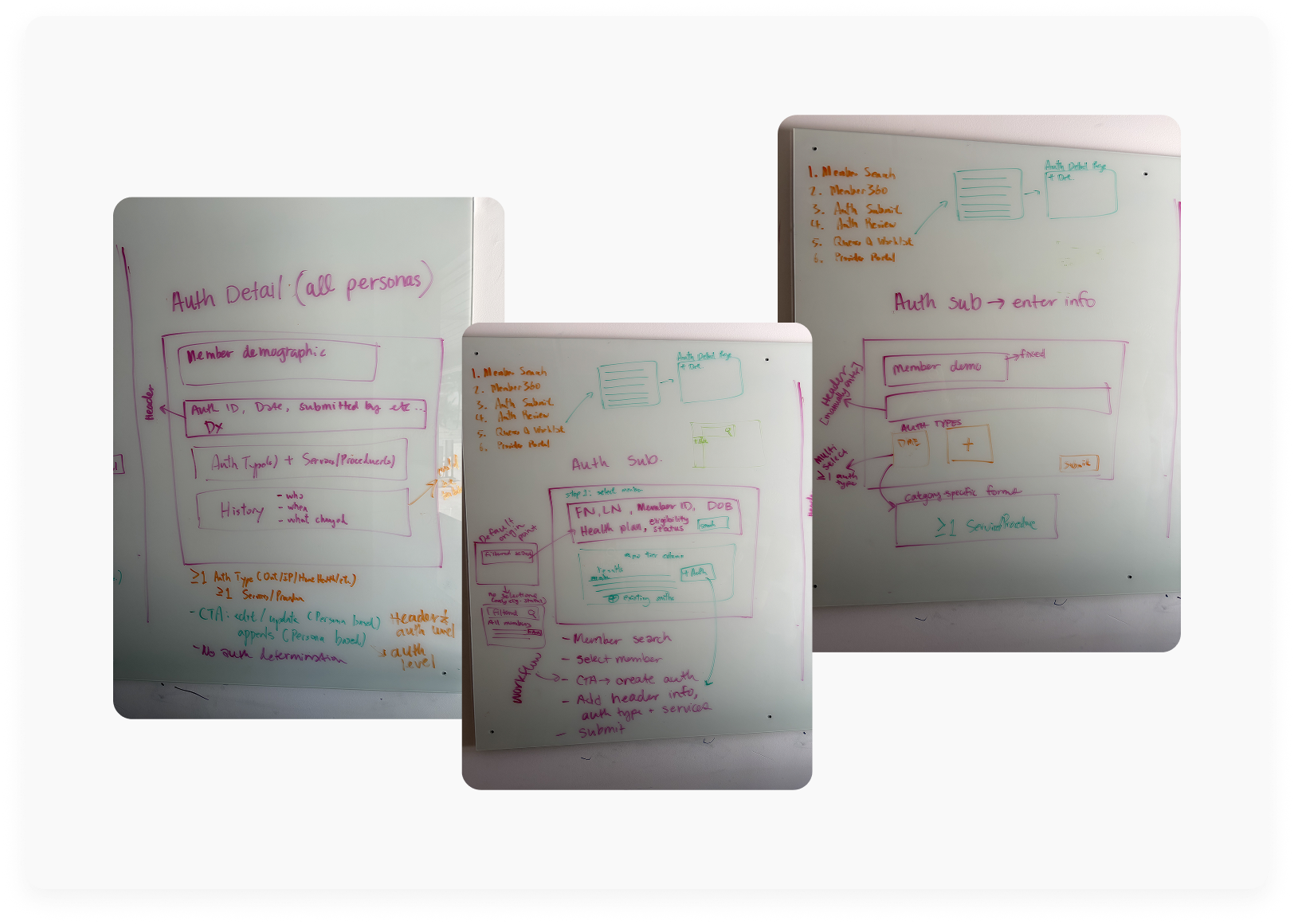
Validation with SMEs and engineering caught edge cases and feasibility constraints when they were still cheap to address.
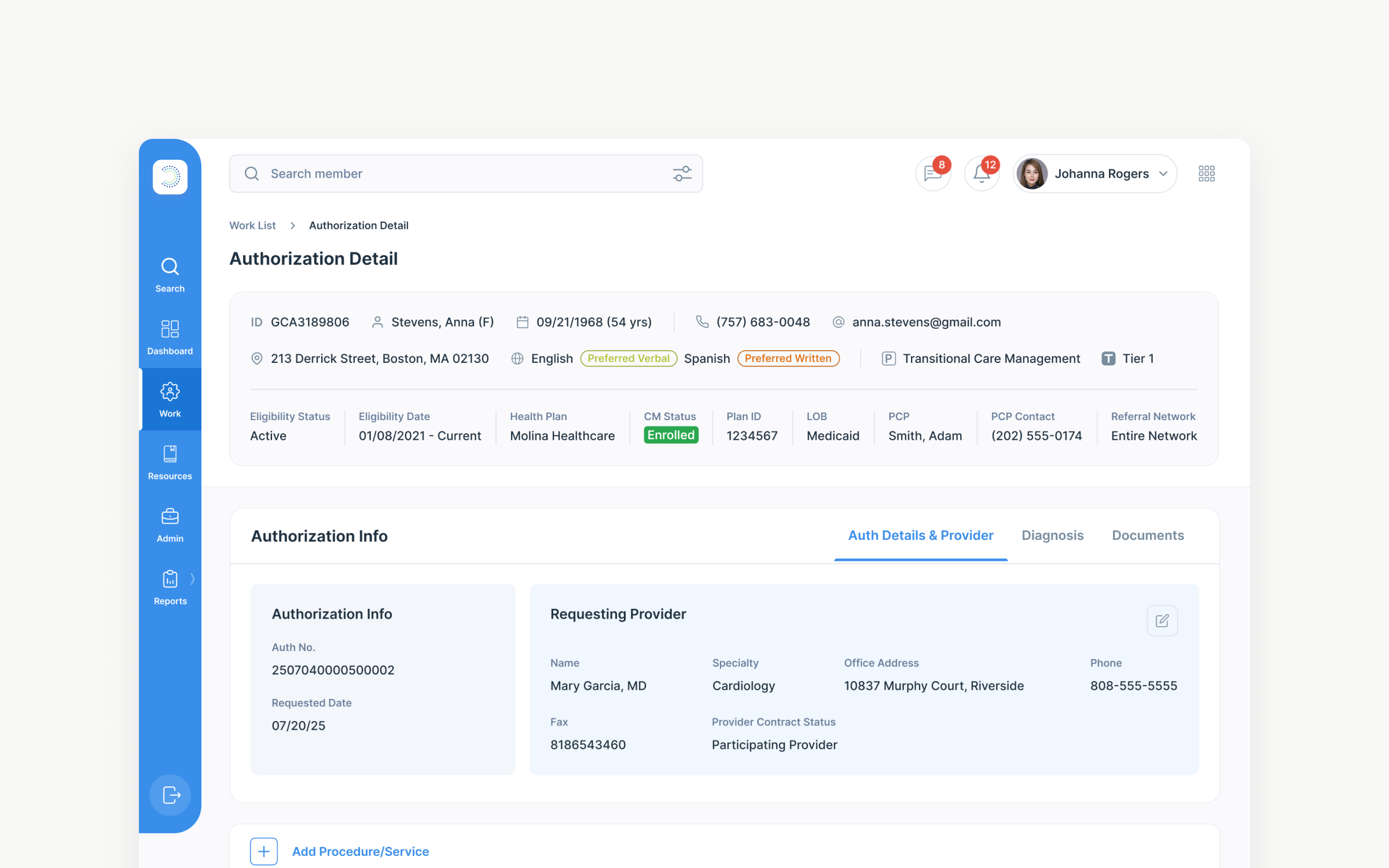
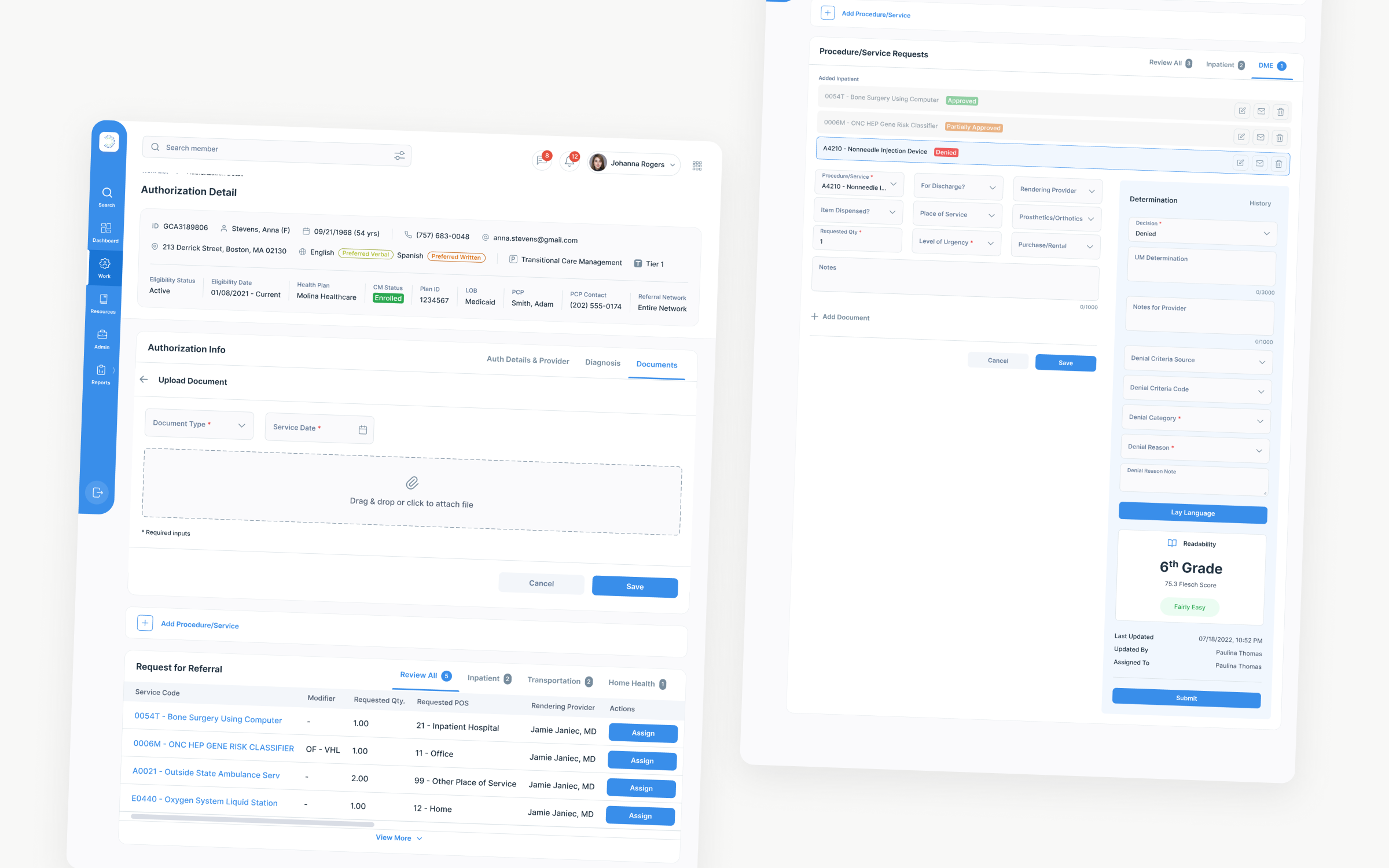
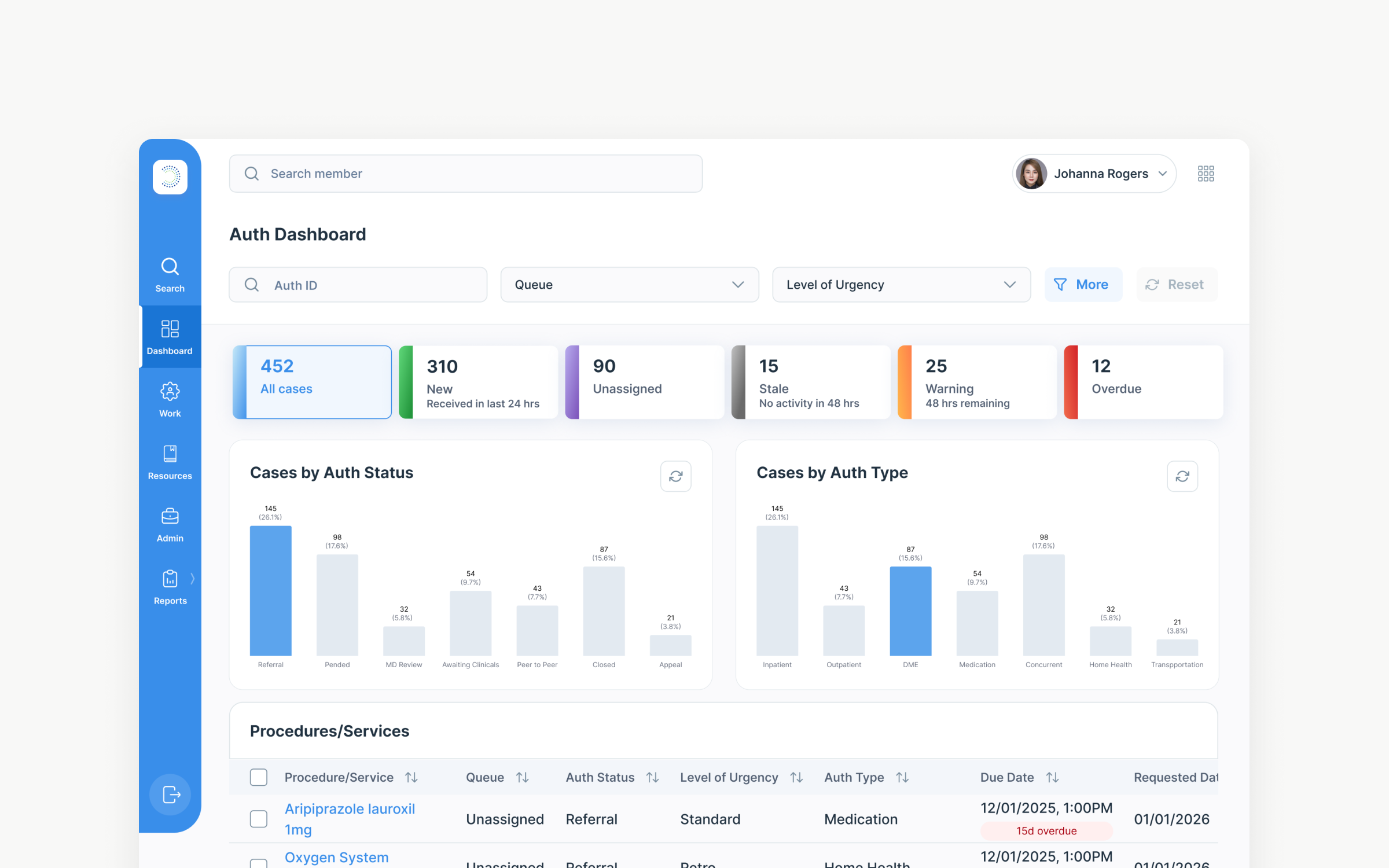
High-fidelity UI was produced as dev-ready Figma, with components aligned to the existing Care Management design system to enforce cross-product consistency and reduce build time.
An AI-integrated QA workflow connected Figma's MCP server directly to Jira tickets, letting developers pull design specs programmatically inside their existing workflow. QA time fell by 75%.
.png)
.png)
.png)